
Reflective Supervision for HR and ER Professionals
Complex casework carries risk. So does the person handling it.
Reflective supervision is a structured, facilitated space that underpins professional competence, supports wellbeing, and protects the quality of decision-making in exactly the cases where the stakes are highest. It is well established in clinical and social work settings. It is long overdue in HR.
What reflective supervision is, and what it is not
The HR role has expanded enormously over the years. HR professionals are now the front line for almost every sensitive disclosure and every complex, difficult change an organisation goes through. Mental health, wellbeing, safeguarding, harassment, sexual misconduct, bullying, grief, crisis. It all comes through HR, often with no warning and no filter. Reflective supervision gives the people absorbing all of that somewhere to process it and stay effective.
What it is not
- Coaching
- Performance management
- Therapy
What it is
A facilitated, confidential space in which an HR or ER professional can step back from the day-to-day reality of the role, the overwhelm, the complexity, the constant flow of sensitive and difficult material, and think clearly and reflect on their practice with someone trained to guide that process.
Its purpose is threefold: to underpin professional competence, to support the wellbeing of the practitioner, and to secure better organisational outcomes by reducing the risk that complex casework can introduce.
Professional competence
Underpins the quality and rigour of the practitioner's work.
Wellbeing
Supports the person carrying the weight of complex casework.
Organisational outcomes
Secures better, more defensible decisions by reducing the risk that complex casework can introduce.
That third purpose is the one most organisations overlook, and it is the one we want to talk about most plainly.
The commercial case
How casework introduces risk
There is a genuine wellbeing conversation to be had here, and we will come to it. But reflective supervision is not only a welfare measure. It is a risk control.
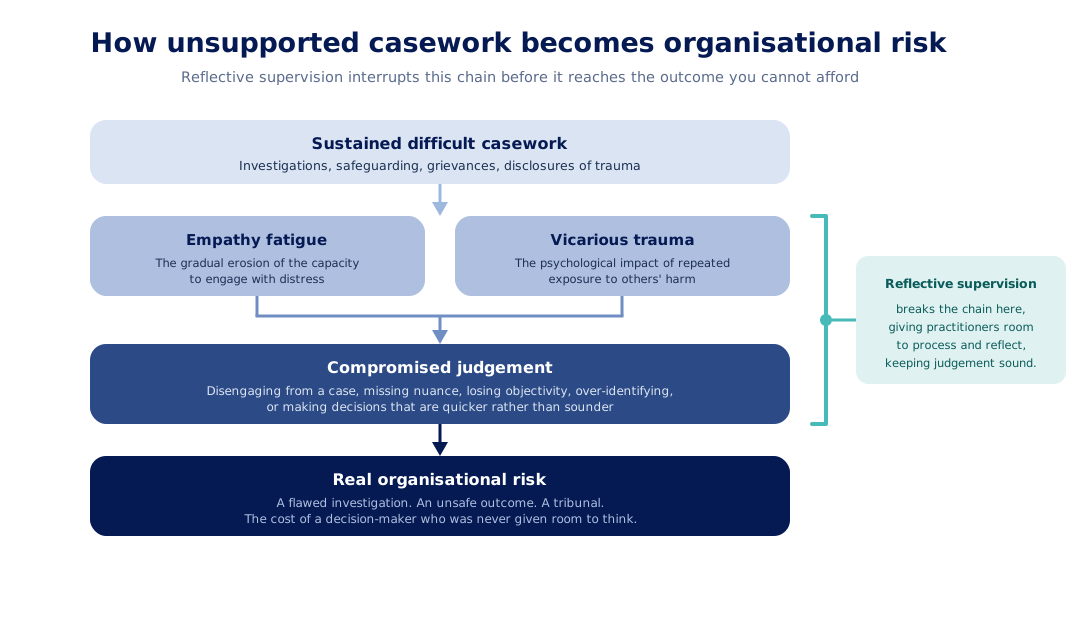
Tap the diagram to view it full size.
HR and ER professionals who handle a sustained diet of difficult cases, investigations into sexual misconduct, safeguarding concerns, grievances, disclosures of trauma, are subject to two well-documented effects. Empathy fatigue, the gradual erosion of the capacity to engage with distress. And vicarious trauma, the genuine psychological impact of repeated exposure to other people’s harm.
These are not soft concerns. They have hard consequences for the organisation. A practitioner experiencing empathy fatigue may disengage from a case, miss nuance, or make decisions that are quicker rather than sounder. A practitioner carrying unprocessed vicarious trauma may lose objectivity, over-identify, or avoid. In casework where every decision needs to be fair, defensible, and legally sound, a compromised decision-maker is a source of real risk. The kind that surfaces in a flawed investigation, an unsafe outcome, or a tribunal.
Reflective supervision addresses this directly. By giving practitioners a regular, structured space to process the weight of their work and reflect on their practice, it keeps judgement sharp, decisions sound, and casework defensible. It protects your people, and in doing so it protects the organisation.
Wellbeing matters too
None of this diminishes the human case. The professionals doing this work are often doing it without any support at all, absorbing distressing material week after week, and expected simply to carry on. That is neither sustainable nor fair, and it drives the burnout and turnover of some of the most skilled people in your organisation.
Supervision gives them somewhere to put it down. The commercial benefit and the human benefit are, in the end, the same thing.
How it works
Our reflective supervision is delivered one to one, and usually online. It works best as a regular, ongoing arrangement, though it can also be accessed as needed depending on caseload and circumstances.
Scheduling is not one-size-fits-all. The right frequency depends on the practitioner’s current caseload, their situation, and the outcomes they and their organisation are looking for. We agree this together at the outset through a supervision contract, a clear agreement covering frequency, purpose, boundaries, and how we will work together. That contract is part of what makes supervision effective, and part of what makes it safe.
Confidentiality and boundaries
This matters, so we are explicit about it.
We will
- Hold a confidential, protected space for reflection
We won’t
- Report back to managers on what is discussed
- Assess or comment on performance or capability
Reflective supervision is confidential. When an organisation buys supervision in for its people, we do not report back to leaders or managers on what is discussed, and we do not assess or comment on an individual’s performance or capability. That is not what this is, and reporting back would undermine the very safety that makes reflection possible.
What the organisation should expect to see is not a report from us, but the results: better organisational outcomes, sounder casework, and healthier, more sustainable practitioners. Being trauma-informed means holding the space, not surveilling it.
Qualified to do this properly
Reflective supervision should only be delivered by someone trained to do it. Our supervision is grounded in formal training with the British Psychological Society in supervision skills, alongside specialist training in trauma-informed practice and sexual violence with Victim Focus, one of the UK’s leading victim support organisations, and years of senior experience handling exactly the kind of casework our supervisees bring.
This is a genuine specialism, not an add-on. It matters that the person holding the space understands both the practice and the psychology behind it.

Frequently asked questions
Is reflective supervision the same as coaching?
Is it therapy?
Who is it for?
If we buy supervision for our team, will you tell us how they are performing?
How often would sessions take place?
Is it delivered in person or online?
Get in touch
Talk to our team
Whether you are enquiring for yourself or on behalf of your organisation, we will come back to you within one working day.
Protect your people and your practice
If your organisation carries complex casework, the people handling it deserve support, and your organisation deserves the risk protection that comes with it. Talk to our team about reflective supervision for your practitioners.