
Case study
A complex medical incapacity case, handled with rigour and care
How a trauma-informed approach resolved a deeply sensitive long-term illness case in a highly regulated sector, protecting both the employee's dignity and the organisation from significant legal exposure.
The stakes
Compensation for disability discrimination in the Employment Tribunal is uncapped. In the 2023/24 reporting year, the maximum disability discrimination award reached £964,465. Once loss of earnings, interest, legal costs and management time are added, the true cost runs higher still. Reputational damage is harder to quantify, and for a small or medium-sized business it can be terminal. Disability discrimination complaints have nearly doubled year on year and are now the second most common type of tribunal claim.
The situation
Our client's employee had been diagnosed with a complex, long-term neurodegenerative disease. Over many years of service, the organisation had made extensive efforts to accommodate the condition. But it was deteriorating, affecting both cognitive and physical capability, and the employee was no longer able to perform their role safely or effectively in a highly regulated, technical sector. Customer relationships and the organisation's credibility were at risk.
Unable to determine whether this was a conduct or a capability matter, the client engaged OneSource HR as an independent disciplinary manager.
The trauma-informed approach
Our first act was to realise what was actually in front of us. Reviewing the investigation, our consultant identified that this was a medical capability matter, not misconduct. That distinction changes everything, for the law, for the process, and for the person at the centre of it. The direction of the case was corrected immediately, and communicated with care.
From there, our approach followed the principles that underpin trauma-informed practice:
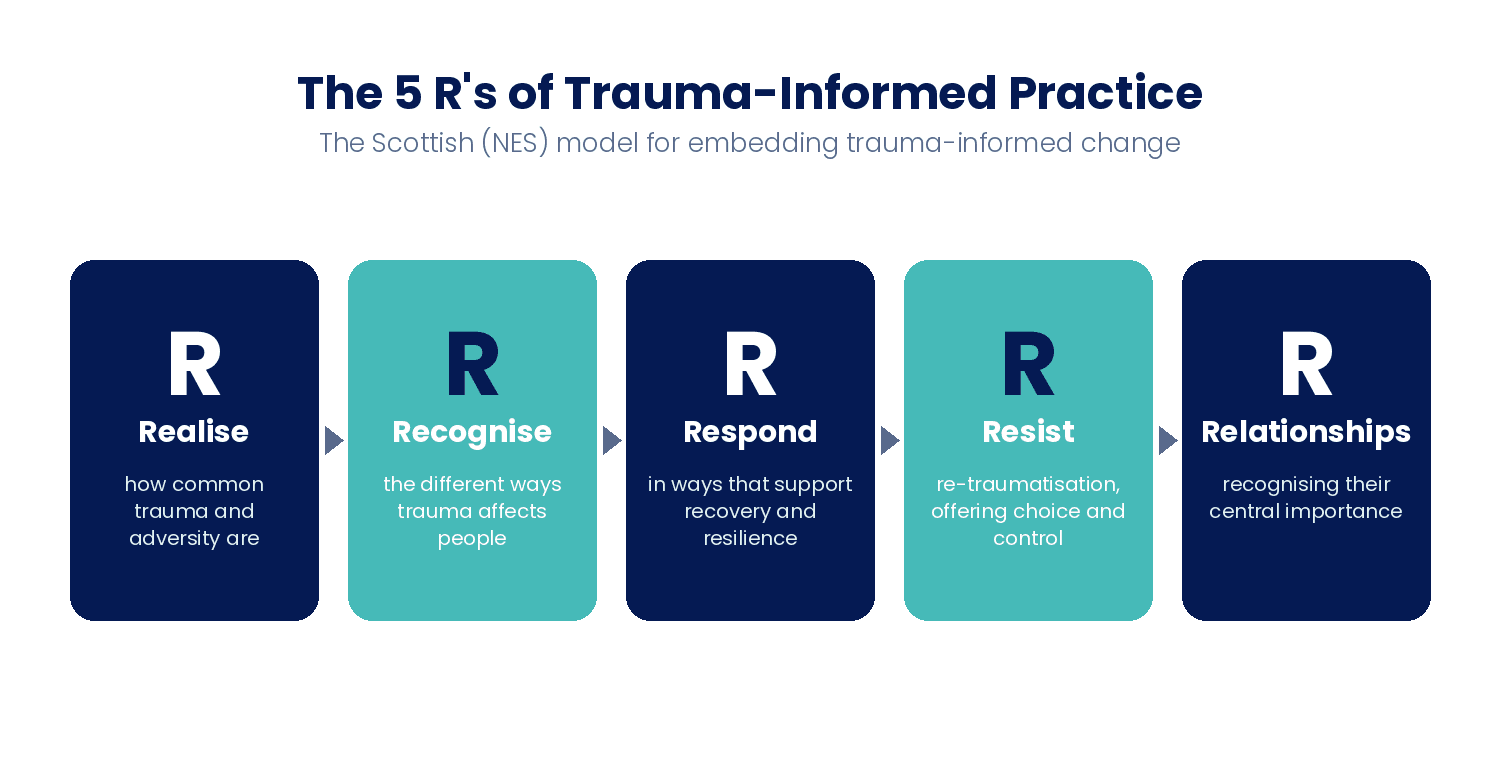
Realise
We understood how common, and how profoundly disorientating, a deteriorating health condition is for the person living with it, and for the colleagues around them.
Recognise
We looked closely at how the condition was affecting this individual specifically: their role, their responsibilities, their cognitive and physical challenges. Not a generic template, but this person, in this job.
Respond
We built a logical, pragmatic assessment of reasonable adjustments with the genuine aim of retaining the employee. We gathered detailed documentation, including medical reports, and considered the legal risk factors properly rather than defensively.
Resist re-traumatisation
We recommended engaging external support, including social workers and appointed specialist bodies, so the employee was not navigating this alone. We ensured emotional and wellbeing support for the individual and for the affected team, and we maintained choice and dignity throughout a process where the person had already lost so much control.
Relationships
We recognised that the quality of every interaction in this process would shape whether the outcome was accepted or contested, and whether the person left with their dignity intact.
This was not a softer process. It was a more rigorous one, and it was harder to challenge because of it.
The outcome
An exit strategy was agreed, underpinned by genuine support for the employee through the transition. The process was fair, ethical, legally sound, and defensible. The organisation's risk was mitigated and resolved. External parties involved in the case commended the conduct of the process for all parties.
What this case shows
Complex medical incapacity cases are not solved by process knowledge alone. They require someone who can hold legal rigour and human complexity at the same time, who understands what a deteriorating condition does to a person, and who can weigh disability properly without either dismissing it or being paralysed by it.
Get it wrong and the exposure is uncapped. Get it right and you protect your organisation and the person at the heart of it.
If you are facing a complex or sensitive capability, disciplinary or grievance matter, involve an experienced, trauma-informed specialist at the earliest stage.
Facing a complex or sensitive disciplinary, grievance or investigation?
Talk to our team. There is no obligation, and no sales script.